
Pillar: Sovereignty & Ecosystems
Sovereign Ecosystems vs. Real Estate: Why Isolation Is Not Autonomy
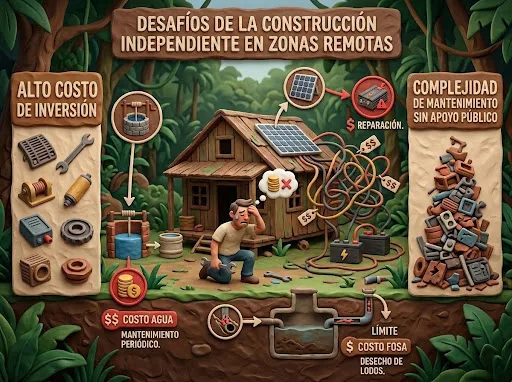
For decades, investing in land has followed a linear script: buy a plot, wait, and hope that an uncertain promise eventually materializes. Many plots marketed as investment land sit inside developments that never prosper, or in areas that municipal services never reach. The purchase is made on the assumption that, one day, the surroundings will catch up.
A second path exists: building your own autonomy. Wells, biodigesters, solar arrays. It sounds like a personal victory, and for a while it feels like one. Then maintenance begins to consume the very freedom it was meant to protect. A remote lot turns its owner into a caretaker of infrastructure instead of a participant in a place.
The illusion of the isolated lot
Ecological isolation is often sold as sovereignty, yet isolation has a hidden cost: every system depends on a single person. When the pump fails or the panels need cleaning, there is no one nearby to respond. What should be a refuge becomes a second job.
This is not a failure of technology. It is a failure of design: infrastructure was planned without a community to sustain it.
From ownership to membership
A sovereign ecosystem does not sell isolation. It establishes membership in a living system where land, water, energy and governance are administered together. Ownership remains, but it is paired with shared stewardship: maintenance schedules, transparent administration and written agreements.
Sovereignty in In Lak’ech is collective. We are not only owners; we are a community that protects the conditions of life.
What a sovereign ecosystem actually maintains
- Water capture, storage and treatment as shared infrastructure rather than a private burden.
- Solar generation and a maintenance calendar administered by the village.
- Conservation of native forest as a reserve and a community pantry.
What this means for a legacy in Yucatán
In the low jungle of Yucatán, the limestone soil, the cenotes and the seasonal rains dictate what is possible. A project that ignores them imports fragility. A project that reads them builds resilience into the structure itself.
That is the difference between a plot and a territory: the plot is bounded by a fence, while the territory is defined by the relationships that keep it alive. A regenerative legacy is measured not only in square meters, but in the capacity of the place to keep regenerating after the first generation.
The question is no longer how much land you can hold alone, but how well the land is held together.